Niger Coup Analysis
Table of Contents 📖
| Topic ID | Topic Title | Timestamp |
|---|
"Russia's creep in its own is its own form of colonialism taking over the power vacuum left by France."
Hello Team!
Jonathan provides an in-depth analysis of the recent coup in Niger and its geopolitical implications, particularly regarding Russia's growing influence in Africa. He emphasizes the importance of understanding these events, even if they seem distant, as they are part of a complex global geopolitical landscape.
Return to top⤴️
Niger's Geopolitical Importance
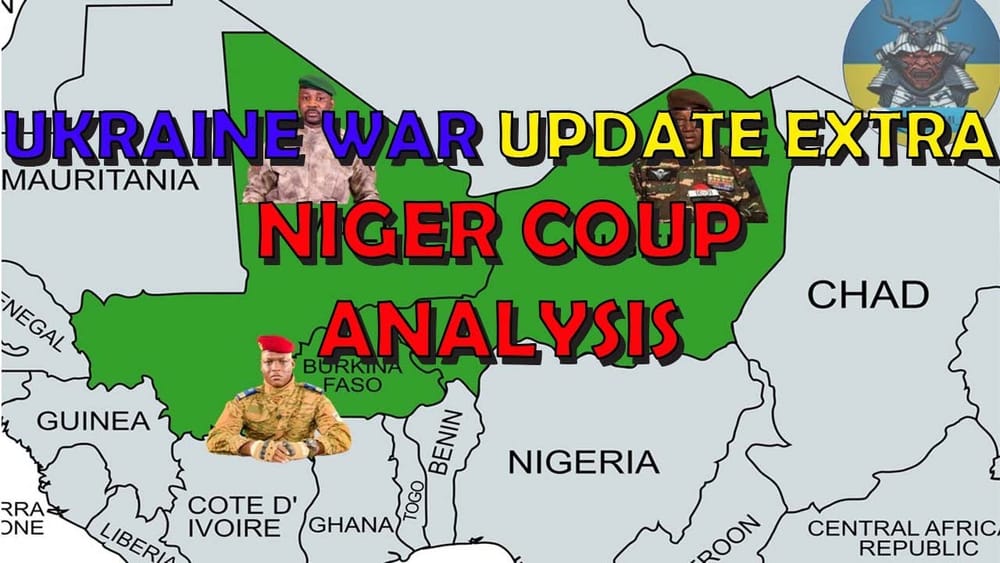
- Niger is a landlocked country in northern Africa, surrounded by Chad, Nigeria, Burkina Faso, Mali, Algeria, and Libya.
- It has been one of the last outposts of Western influence in the region, with France and the US providing military aid and support.
- Niger is a key ally in the fight against jihadist groups linked to al-Qaeda and ISIS in the Sahel region.
- The US has a $100 million drone base in Niger, which is crucial for monitoring terrorist activities.
The Coup and Russia's Influence
- The recent coup in Niger has raised concerns about the country's stability and its future alignment with the West or Russia.
- Mali and Burkina Faso, which have experienced similar coups, have already kicked out French troops and UN peacekeepers, aligning themselves more closely with Russia.
- Russia's private military group, Wagner, has been expanding its presence in Africa, offering security assistance without the demands for democracy and human rights that Western countries impose.
- This coup is seen as part of a broader trend of Russia gaining influence in Africa at the expense of Western powers.
Implications for France and Europe
- Niger is a critical supplier of uranium to France, which relies heavily on nuclear power for its electricity.
- The coup leaders have banned uranium exports to France, which could potentially lead to a new energy crisis in Europe.
- France also exports electricity to other European countries, including Germany, so any disruption to its uranium supplies could have wider implications.
- The planned Trans-Saharan gas pipeline from Nigeria to Europe, which is intended to reduce reliance on Russian gas, could also be jeopardized by instability in Niger and the wider region.
The Global Geopolitical Context
- The struggle for influence in Africa between Russia and the West is part of a broader geopolitical competition.
- Russia's growing presence in Africa, through Wagner and other means, is seen as a form of neo-colonialism, filling the vacuum left by France and other Western powers.
- This is a "zero-sum game," where Russia's gains come at the expense of the West's influence and interests.
- The US and other Western countries have strategic interests in Africa, including access to resources, counter-terrorism efforts, and maintaining global power dynamics.
Why This Matters
Jonathan argues that even if the coup in Niger and Russia's growing influence in Africa may not seem directly relevant to the US or other Western countries, they are part of an interconnected global geopolitical landscape. Instability in Africa can fuel extremism, disrupt global trade and energy supplies, and shift the balance of power in ways that have far-reaching consequences. As such, it is crucial for policymakers and the public to pay attention to these developments and understand their implications.
Return to top⤴️
Wrap up
In conclusion, the coup in Niger and Russia's expanding influence in Africa are significant geopolitical events that have implications for energy security, counter-terrorism efforts, and global power dynamics. As Russia fills the vacuum left by Western powers, it is crucial for the US and its allies to develop a coherent strategy to address these challenges and protect their interests in an increasingly complex world.
Return to top⤴️